
Sanctification and Brushing Your Teeth

Sanctification and Brushing Your Teeth

I started suddenly getting tons of cavities as an adult, and it was very frustrating (and expensive). I had been flossing, brushing twice daily, and going to my twice-yearly checkups like a good boy. Their only explanation was that some adults are more prone to cavities. They recommended some high-fluoride $20 toothpaste and suggested that I get an electric toothbrush.

I got my new tooth-tickling brush Christmas one year, and since then, I’ve been intrigued. With this magical brush, all you have to do is move it painstakingly slowly over your teeth; the moving bristles do all the work. Even though I’ve had it for a while, I instinctively feel like I should be scrubbing my teeth manually. It seems unnatural every time since I had been brushing my teeth the same way since my most formative years. Why should I trust this tool to do the work? And do I have to take the full 2 minutes of brushing?

Read more →

An Interview with Mike Massé About Holiness

I interviewed Mike about his book, #iamholy, that discusses holiness in and how God sees us as completely holy when we believe in Jesus. This imparted holiness then becomes the springboard for us to become more holy in our actions and minds. [embed]https://youtu.be/VhB9t0mB8kM[/embed]

Our Conversation about Holiness

  • How would you describe #iamholy if someone asked you about it in an elevator and you only had a few minutes?

  • What were some of the main influences you had for writing #iamholy?

    Read more →
Book Preview #3: James 2:8-13 - The Stain Glass Law

Book Preview #3: James 2:8-13 - The Stain Glass Law

Merry Christmas, everyone! As many of you know, I will be publishing James, a book on the letter of James, in early 2016. In anticipation of that, I will be posting snippets of the book for all of you to enjoy. Here is another sneak preview:

The Stained Glass Law

In his commentary on James in his ESV Study Bible, James MacArthur describes God’s law as being a single piece of glass. When I imagine what that piece of glass would look like, I see it as a beautiful, stained glass portrait of God in all of his blazing righteousness. I know that a stained glass window does not behave in the same way as a single pane of glass, but please indulge my imagination. I then envision that my selfishness in one instance is like a spiritual sledgehammer that has been hurled at the section of the portrait representing God’s requirement to be unselfish. What do you see happening next? In my mind, the window is rocked by the force of the blow in that one section. The entire masterpiece then splinters into countless fragments that come crashing down on the floor. That single blow to one part of the portrait reverberated throughout the stained glass. MacArthur uses the analogy of the sheet of glass to represent God’s law because, he says, by breaking a part of the law you have broken the integrity of the whole law. It is not that my one sin caused me to commit every other sin under the law, but that my selfishness obliterated the flawlessness of the law that I am required to keep. For me, it is no longer structurally sound and does not carry the perfection that God righteously demands. Unfortunately, from when we were young children, we have been continually smashing the glass of the law, often repeating the same sin over and over.

Read more →
Poison Ivy and Sin

Poison Ivy and Sin

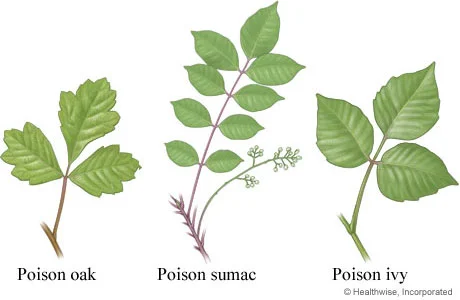
It’s that time of year where we play outside the most, so naturally it’s the time for all of us unfortunate enough to get poison ivy to break out in oozing rashes. If you’re the rare person who doesn’t violently react to poison ivy, please keep it to yourself. It just makes the rest of us sad. Thankfully, I haven’t gotten poison ivy this year. The interesting thing is that the oil that most of our skins react to isn’t the plant’s dastardly plan to keep us away from it. White-tailed dear actually enjoy eating poison ivy. Rather than being the oil, it is our skin’s reaction to the oil that makes poison ivy so miserable. Our body identifies the oil as an intruder and does everything it can to get rid of it. If our skin didn’t respond to it that way, the oil would simply come off or be absorbed by our skin with no ill effect.

Read more →